Tuesday, 3 September 2013

GALAXY GOES AGAIN....................HIGH

Samsung Galaxy 6.3 review
samsung-galaxy-mega-63-635.jpg
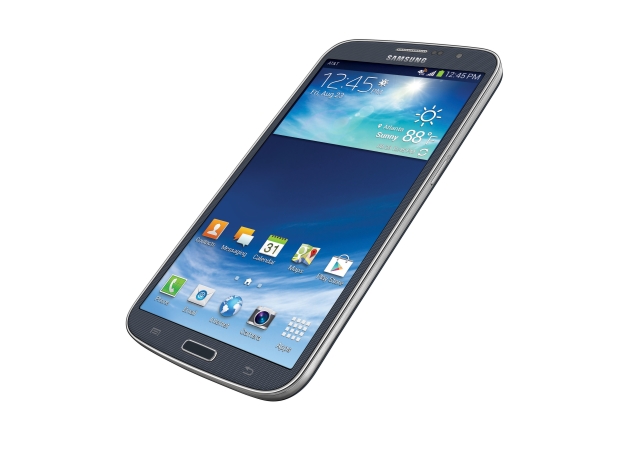
Please turn off all electronic devices, the flight crew instructs as we approach Los Angeles. With a small phone, I might have gotten away with ignoring safety regulations. Samsung's new Galaxy Mega 6.3 phone was too conspicuous for that.
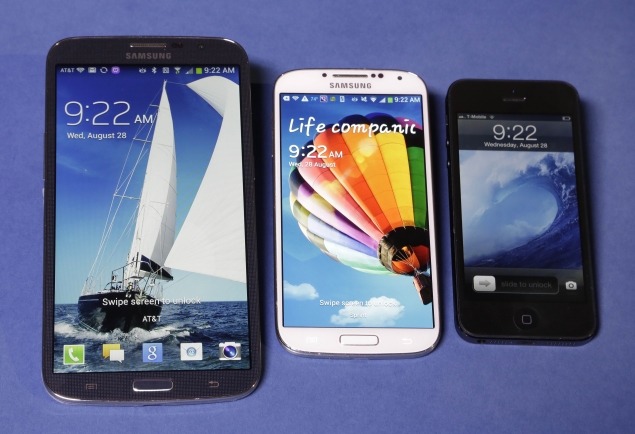
The Mega shouldn't even be called a phone, if it weren't for the fact that it makes phone calls. With a screen measuring 6.3 inches (16 centimeters) diagonally, the Mega is more like a small Android tablet computer. It shares the tablet's advantages in showing more detail in photos and video. Text is larger and easier to read, too.
That doesn't make the Mega practical, though.
As a phone, it's huge. It doesn't fully fit in the pocket of my jeans, and it sometimes pokes at my stomach when sitting. It doesn't feel comfortable in my hands. I'm unable to grip it tightly because it's so wide, so I feel as if it's going to slip out of my hands. Without that grip, I also feel that it'll be easy for a thief to snatch it away.
A friend jokingly said that it was bigger than her head as she held it up to her ear. A cousin called it ridiculous. A co-worker pointed out that cellphones used to be big, too - in the 1970s.
It could have been worse.
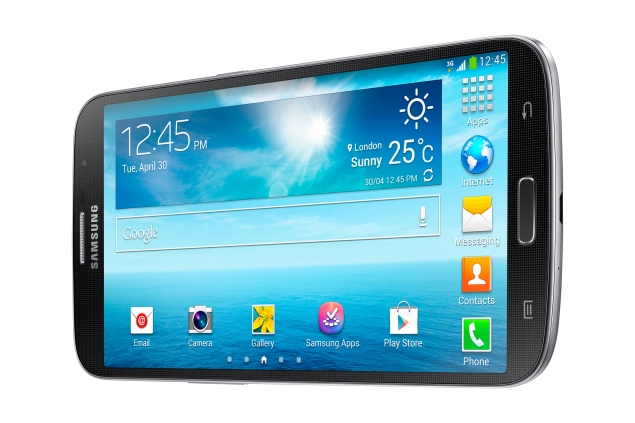
Samsung's Galaxy Note 8.0 tablet has an 8-inch (20.3-centimeter) screen, its diagonal length just a quarter larger than the Mega's. But the tablet is about twice the size of the Mega, in part because it has a thick frame. With the Mega, the screen stretches close to the edge, keeping the overall device relatively slim. Held on its side like a movie screen, the Mega is about as wide as a dollar bill, but slightly taller.
AT&T Inc. is selling the Mega for $150 with a two-year service contract, or $480 without one. By contrast, smaller phones such as Apple's 4-inch (10-centimeter) iPhone 5 and Samsung's 5-inch (12.7-centimeter) Galaxy S4 typically go for $200 with a contract and more than $600 without.
samsung-mega-s4-and-iphone-635.jpg
The Mega also costs just half of AT&T's contract price for Samsung's 5.5-inch (14-centimeter) Galaxy Note 2. It's like getting a bigger screen for less. The Mega is only a tad heavier - at 7 ounces (198 grams), compared with 6.4 ounces (181 grams) for the Note 2. (Samsung is expected to announce the Note 3 in Berlin on Wednesday evening.)
The Mega is also coming to Sprint and U.S. Cellular. Dates and prices haven't been announced.
Although I don't see myself using the Mega, I can see its appeal to those who are willing to carry along a tablet computer but don't want to carry a second device - the phone.
The Mega gives you many of the benefits of tablets. With the larger screen, I can read small print on websites without zooming in, and I make fewer mistakes when trying to click on buttons and links. For ebooks, I get a screen size that feels closer to a paperback. I see slightly more content when checking email or Facebook. I don't see a whole lot more, though. Typically, text and images simply get larger to fill out the additional screen space.
Some Android apps have been adapted to take advantage of the tablet's larger screen, but for the ones I checked, apps appear on the Mega as they would on other phones. With the Foursquare social network, for instance, a map showing nearby friends and venues is squeezed into a rectangular banner at the top when held vertically. On tablets, the map is allowed to fill out the entire right half of the display.
It's a shame that the display isn't sharper. The resolution is 233 pixels per inch, compared with 441 for the Galaxy S4 and 326 for the iPhone 5. Video looks dull on the Mega by comparison.
And fans of the Note might be disappointed with the Mega. Although the Mega has a larger screen, it doesn't come with a stylus, something the Note is known for.
samsung-galaxy-mega-screen-635.jpg
I am impressed by the Mega's battery life. Despite the larger screen, which uses more energy, the Mega outlasted Samsung's flagship phone, the S4, in streaming video on Netflix. I got nearly six hours on the Mega, compared with nearly five hours on the S4. The Mega is packed with a larger, higher-capacity battery - something the S4 couldn't have because of its size.
As with other Samsung phones, the Mega comes with an array of Samsung apps, including ones for translating text, taking notes and controlling a TV by turning the phone into a remote control. There's also an easy mode with limited options for first-time smartphone users, plus ways to perform tasks without actually touching the phone. Some of these features can be useful. Others are gimmicky or duplicate what comes standard with other phones running Google's Android system.
I decided to use the Mega to finish reading the ebook "Up in the Air" near the end of my flight to Los Angeles. I figured it was fitting given that its main character spends his life racking up frequent flier miles on planes. But a flight attendant spotted it on my lap and said, "You can turn that off now, please."
Busted.
About 20 minutes later, we landed. I called my brother to pick me up at the airport. For that, I used the smaller iPhone 5.
The Mega remains a novelty that will appeal to people who primarily want a tablet and make few calls. For everyone else, small is the way to go.

BE SAFE NOW LOCKS


Apps bring lock and key into the digital age

keyme-app-635.jpg
The lock and key has been a mainstay of security for thousands of years, but companies developing new apps are bringing them into the digital age, allowing people to share keys digitally and gain keyless access to homes.

KeyMe, an app for the iPhone, aims to modernize the way spare keys are stored, and how copies are shared with family and friends. With KeyMe, home owners can photograph their keys, which the app converts into instructions that a locksmith can follow to replicate the key.

"When you get locked out, instead of waiting for a few hours and spending hundreds of dollars for a locksmith, you can go to your local mom and pop shop and pull up instructions for them to make a copy of your key," said Greg Marsh, chief executive officer of KeyMe, based in New York.

Digital keys can also be shared with others, such as a new roommate or out-of-town guest. The app, available in the United States is free, but instructions for replicating the key cost $9.99 and copies of keys can also be ordered for up to $7.

Other apps use the smartphone as a digital key that can unlock doors.

Lockitron, for iPhone and Android, and the apps Kevo and August for the iPhone, pair with digital devices that are attached to existing locks or replace locks to provide keyless entry, and allow home owners to remotely control who can enter their homes.

"Just say you have a dog-walker, or maybe your parents are in town for the weekend. You can provide them with temporary access to your home through the app," said Cameron Robertson, co-founder of Apigy, creators of the Lockitron, based in Mountain View, California.


The apps connect with the locks through low-energy Bluetooth technology to unlock doors if users are authorized. They can also notify a home owner when someone enters and leaves a home. The devices linked to the apps control existing deadbolts or act as a digital deadbolt.

But not all security experts are convinced.

"I have reservations considering the results of my research showing that these types of devices tend to be vulnerable," said Daniel Crowley, a researcher at Chicago-based security company Trustwave.

Creators of the apps said security is a top priority and the companies encrypt the communications. Kwikset, which makes and markets door locks and hardware, has hired security experts to unearth vulnerabilities, and KeyMe does not store any personal information, such as location, with key images.

"This is a new product category so we have to prove to consumers that this is something they can trust," said Jason Johnson, CEO of San-Francisco company August.

The apps and the devices they pair with range in price from $179 to $219.

But will keys ever disappear?

"There's no doubt about it that the electronic space is growing significantly but I still think keys will be out there for a while," said Marty Hoffmann, vice president of marketing at Kwikset, based in Lake Forest, California.

"There's a reason they've been the dominant technology for thousands of years," said Marsh.

MICROSOFT HAS A CORNER FOR NOKIA TOO....................................

Microsoft shares fall on concerns about Nokia deal

Microsoft-Windows8-users-635.jpg
Microsoft's stock declined Tuesday, as several industry analysts questioned if the company's $7.2 billion acquisition of Nokia's cellphone business is a smart move.
The Redmond, Wash., has been racing to catch up with demand for smartphones and tablet computers. The shift to mobile computing from traditional PCs has weakened Microsoft while empowering Apple, which makes the iPhone and iPad, and Google, which gives away the world's most popular mobile operating system, Android.
Microsoft is now betting it will have a better chance of narrowing the gap with its rivals if it seizes complete control over how mobile devices work with its Windows software. It plans to pay $5 billion for the Nokia division that makes mobile phones, including its line of Lumia smartphones that run Windows Phone software. Another $2.2 billion will be paid for a 10-year license to use Nokia's patents, with the option to extend it indefinitely.
"Until there are signs that (Microsoft) can innovate and successfully execute in the post-PC era, we expect the stock to languish at current levels," said Janney analysts Yun Kim and Alice Hur. "We do not believe the planned acquisition of (Nokia's) mobile business changes (Microsoft's) strategic positioning in the smartphone market."
Buying Nokia's phone business makes it unlikely that Microsoft would separate its struggling consumer business from its successful enterprise business, said Walter Pritchard of Citi Investment Research. Some investors and analysts had speculated that Microsoft might do that, he said in a client note.
The analyst also believes the Nokia acquisition may temper the optimism that investors had about a new Microsoft CEO shaking up the company. Investors could conclude that buying the Nokia unit locks Steven Ballmer's successor into the current strategy at the business, Pritchard said. Ballmer announced less than two weeks ago that he will step down from the CEO post within the next year.
Monday's announcement has fueled speculation that Nokia CEO Stephen Elop, who left Microsoft in 2010, will emerge as a top candidate to succeed Ballmer. He will rejoin Microsoft as executive vice president of Nokia devices and services once the acquisition closes.
Microsoft Corp. hopes to close on the deal early next year.
A representative for Microsoft did not immediately respond to an email seeking comment.
Shares of Microsoft fell $2.02, or 6.1 percent, to $31.38 in late morning trading. Shares had gained 25 percent this year.
Nokia's U.S.-traded stock soared $1.32, or 34 percent, to $5.22. The shares hit $5.58 earlier in the session, their highest level since February 2012.